
Stop 21 of 33
Lower Back Walk
Stirling Castle was attacked or besieged at least 16 times during its long history, so in medieval times this area, situated close to the Castle Rock, would have been kept free of trees to enable sentries a clear view of any potential attack.
If you look closely, signs of a previous Royal Garden can still be seen on both the upper and lower hillside. This area used to form part of a 16th-century tiered "hanging garden" where fruit trees and other plants grew. In 1582, James VI gifted Parkhill, which included this hillside garden and the orchard established by James IV in the Haining below, to Annabella, widow of Regent Mar.
In the early 18th century, William Edmonstone created the first stage of the Back Walk, which was extended as tourism developed in the late 18th and early 19th centuries. Walks extended right round the Castle, ornamented with trees and by provision of seats.
As you walk along, notice on the left side a magnificent wood carving created from a single felled tree. The carver Tommy Craggs (Castleside Carvings) used a chainsaw to create a seated highlander, a unicorn, a wolf and a dragon. The unicorn is a symbol of purity which appears on the Scottish royal coat-of-arms.
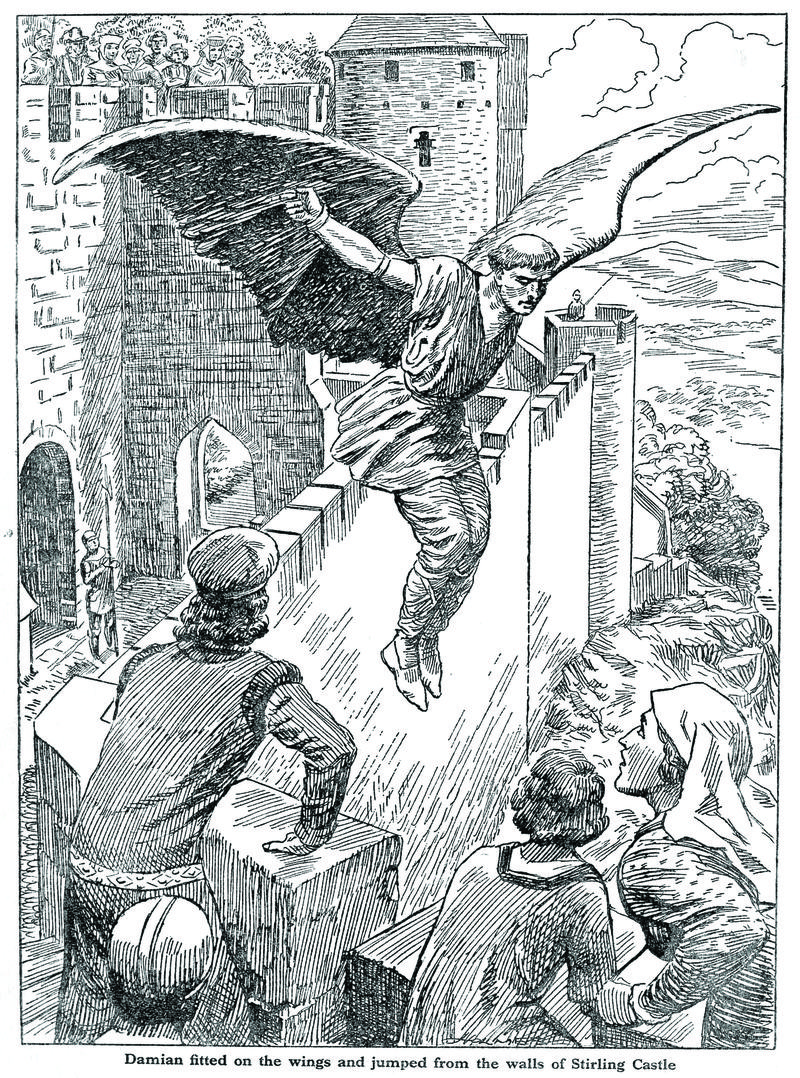
In 1503, the royal alchemist John Damien attempted an early flight experiment by trying to fly from Stirling Castle to France with feathered wings. Jumping from the west side of the castle he fluttered down, landing in the castle midden and breaking his leg in the process. The castle midden was probably located somewhere directly under the castle in the area of the High Back Walk.
Know more about this place, or have a photograph or memory of it to share? Tell us →