
Stop 32 of 33
Stirling Races
Golf is played next to this path. On hearing "Fore", cover your head and turn away from the direction of play. Golf safety →
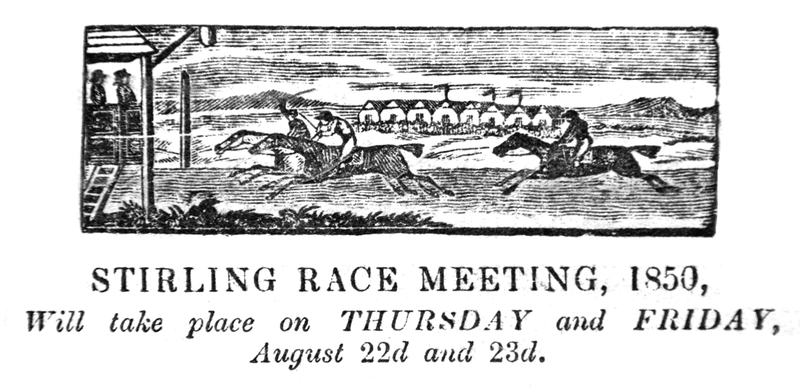
For a long time, horse racing had proved a popular sport in Scotland. Annual horse racing events, such as the Chapmen races, took place in Kings Park prior to, and during, the 19th century. Earlier races tested stamina and strength and were said to have followed the edge of the high ground in the park. Around 1800, the Park Loch was drained and a raised embankment created to form a flat horse racing circuit. This new race course took a circular route around the park. A grandstand was later added in 1841, situated near the site of the old park quarries, with stables nearby for the horses. This grandstand was burned down in 1872.
During the first half of the 19th century, the Stirling Races became popular annual events, with the Stirling Gold Cup — to the value of one hundred sovereigns — featuring as the main prize. People travelled from all over Central Scotland by coach, steamer or train (the new railway arrived in Stirling in 1848) to attend this event. Much of the credit for the popularity of the Stirling Races was due to William Ramsay of Barnton, a well-known sportsman, coach operator and politician. Leaders of the temperance movement in Stirling, notably Peter Drummond, raised concerns that these race meetings were contributing to drunkenness and gambling among the local population. These concerns gained local support, and in 1854 the last race meeting was held.
Mackay's 19th-century Penny Guide to Stirling laments the loss of the annual Stirling Races, which "some might reckon one of the chief glories of Stirling". However, it does admit these races brought the "rowdies" as well as the gentry into the town.
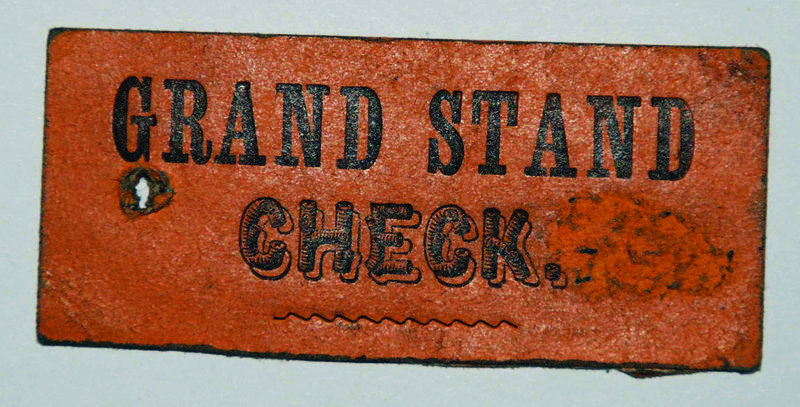
The course itself is on the national record: Canmore lists a 19th century racecourse here, its circuit centred on the open ground north of this point. You are standing close to where the grandstand of 1841 stood, near the old park quarries, until it burned down in 1872.
Know more about this place, or have a photograph or memory of it to share? Tell us →